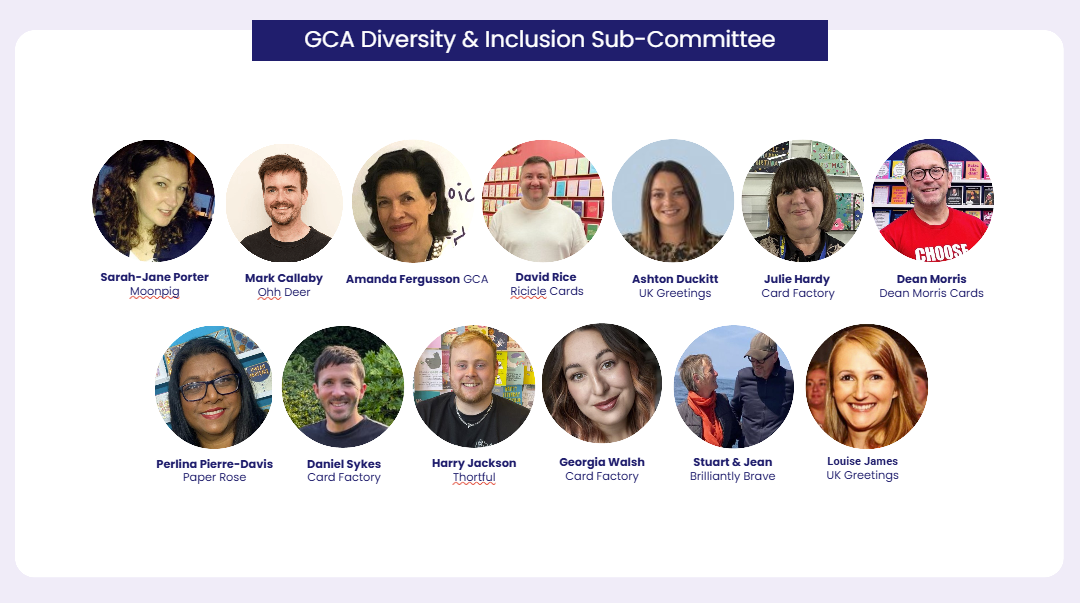
The GCA Diversity & Inclusion Sub-committee, led by Sarah-Jane Porter, Global Design & Licensing Director at Moonpig, have been focused on inclusivity, the language we use on cards, and have identified changes in when and how consumers are now using cards.
This work was started in 2023 following our workshop with children’s bereavement charity Winstons Wish, which led to the GCA publishing guidelines for greeting card designers designing cards for children , moving away from some traditional terms like ‘sympathy’ which don’t resonate in the same way with consumers today.
“Cards have always been about connection. Our task is to ensure our language, imagery and categories reflect the many ways people now want to connect”.


Under Sarah-Jane the GCA D&I subcommittee, including representatives from retailers and publishers across the industry, looked at language used and undertook new research, exploring how the greeting card industry’s traditional care categories are evolving to reflect the changing ways people connect, support one another and navigate life’s challenges.
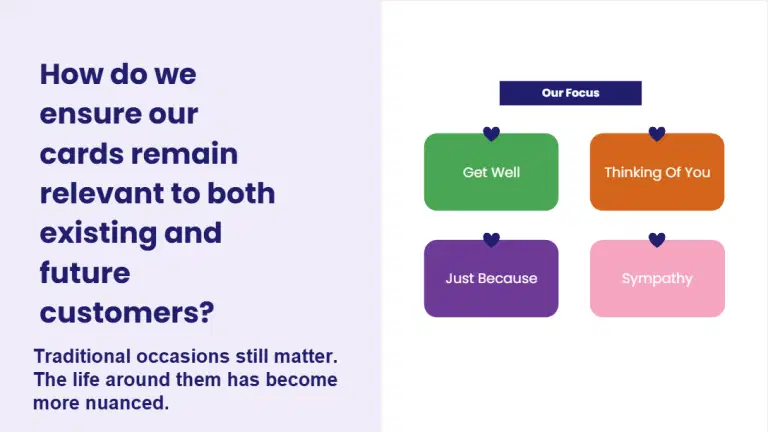
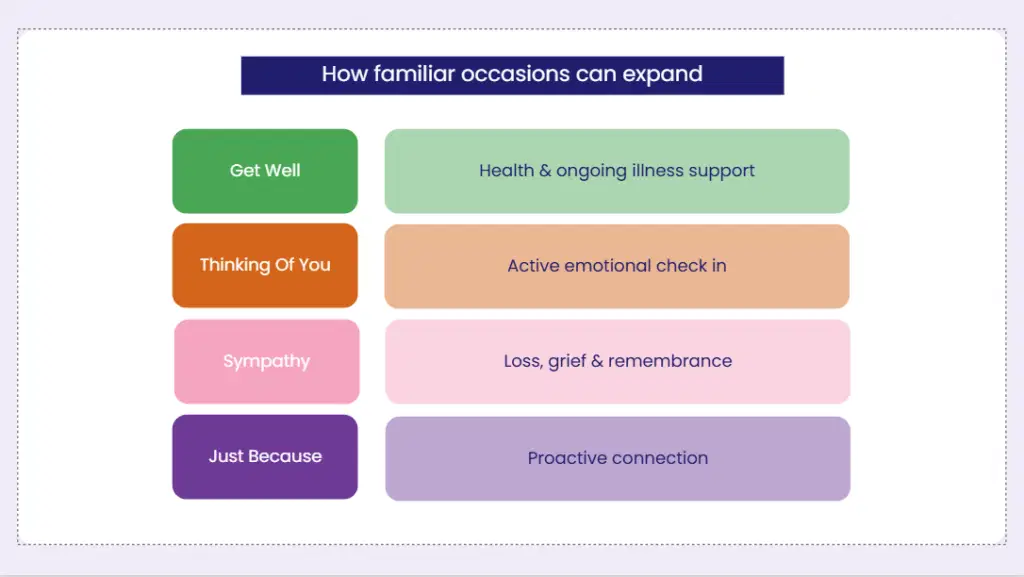
Greeting cards have always helped people mark life’s important moments, offering support during difficult times and celebrating milestones along the way. Familiar occasions such as Get Well, Sympathy, Thinking of You and Just Because remain an important part of the market, but as Sarah-Jane explained, the lives and experiences surrounding these occasions have become increasingly nuanced.
Sarah-Jane presented this at the 2026 GCA Conference and AGM.

The work began with a simple but important question:
Ensuring cards remain relevant to existing and future customers
As an industry built on helping people connect, greeting cards need to continue reflecting the realities of modern life.
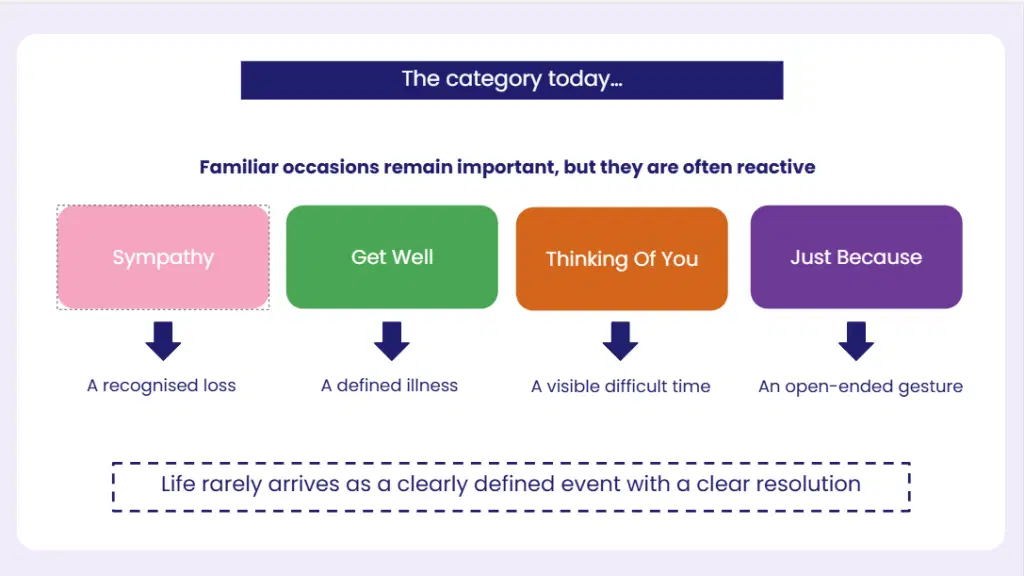
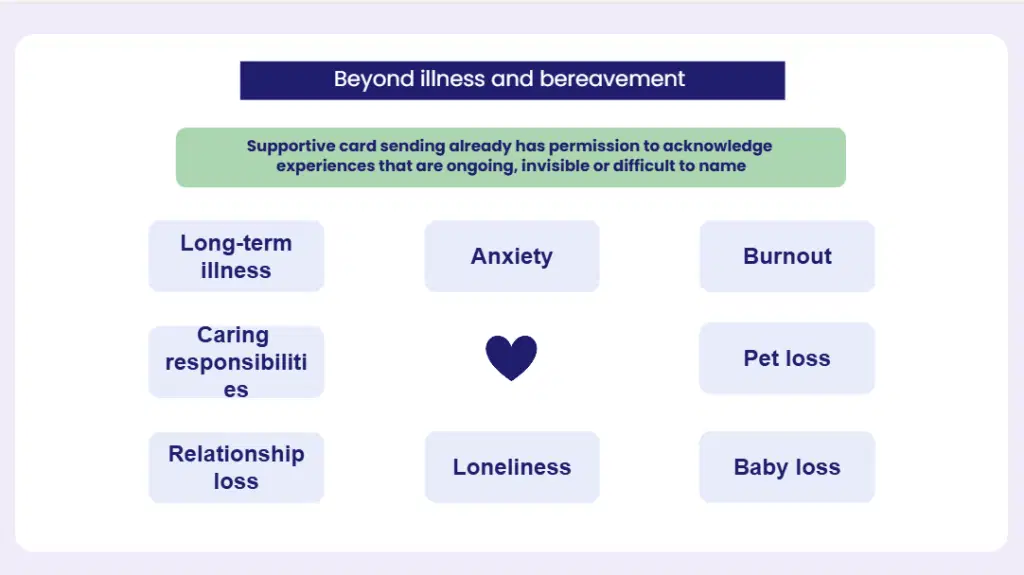
While many traditional occasions are linked to a clearly defined event, today’s consumers are increasingly looking to acknowledge experiences that are ongoing, complex and often invisible to others.
Experiences such as anxiety, burnout, loneliness, caring responsibilities, fertility struggles, long-term illness, pet loss and bereavement anniversaries are all examples of experiences that may not fit neatly into traditional card categories yet remain moments when connection and support can make a real difference.
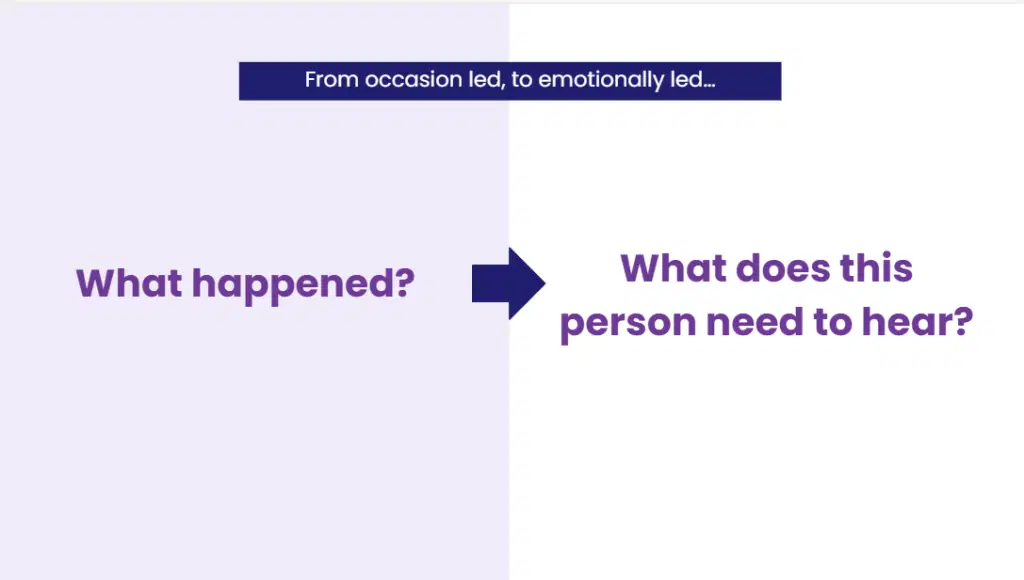
From Occasion-Led to Emotion-Led
One of the key themes of Sarah-Jane’s presentation is a shift in thinking.
Traditionally, card sending has often focused on the event itself. Care & Connection encourages us to think instead about the emotional need behind the send.
Rather than asking:
“What happened?”
we might ask:
“What does this person need to hear?”
This isn’t about replacing established occasions such as Sympathy or Get Well. Instead, it’s about recognising that emotional support isn’t always tied to a single event and that the way people experience life’s challenges is becoming increasingly diverse.
The presentation explored how existing categories can evolve:
Why Is This Happening?
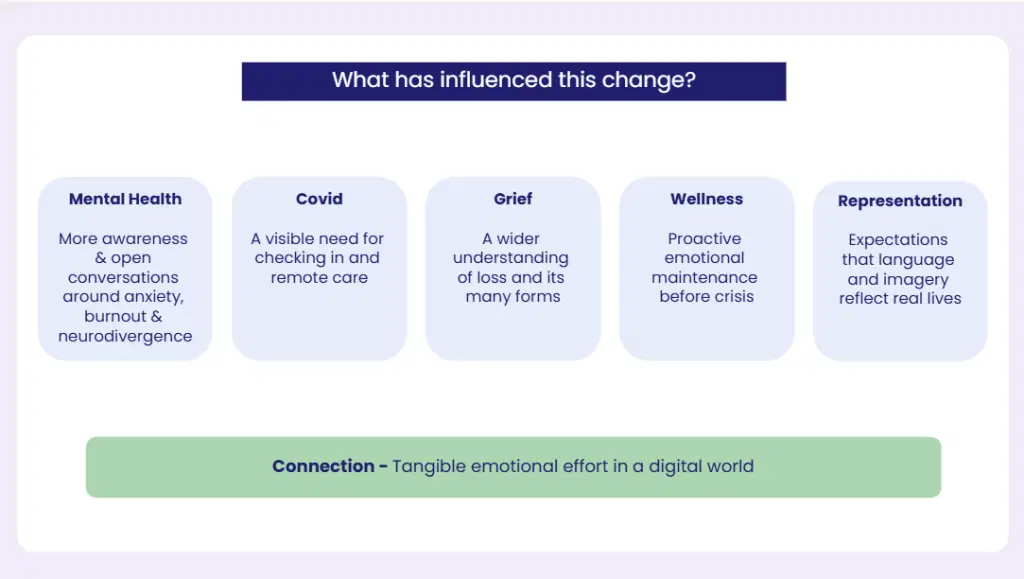
Care & Connection reflects wider shifts that are taking place across society.
Conversations around mental health, neurodiversity, burnout and wellbeing are more open than ever before. Our understanding of grief and loss has also broadened, recognising experiences such as divorce, fertility struggles, baby loss and pet loss alongside traditional bereavement. At the same time, people increasingly expect products and messaging to reflect the diversity of real lives, relationships and experiences.
The pandemic also highlighted the importance of staying connected and checking in with others, while reminding us of the value of tangible acts of care.
In an increasingly digital world, a greeting card remains a powerful expression of emotional effort; a physical reminder that someone is thinking about us.
What Are Consumers Telling Us?
Research presented during the session showed a clear appetite for supportive card sending.
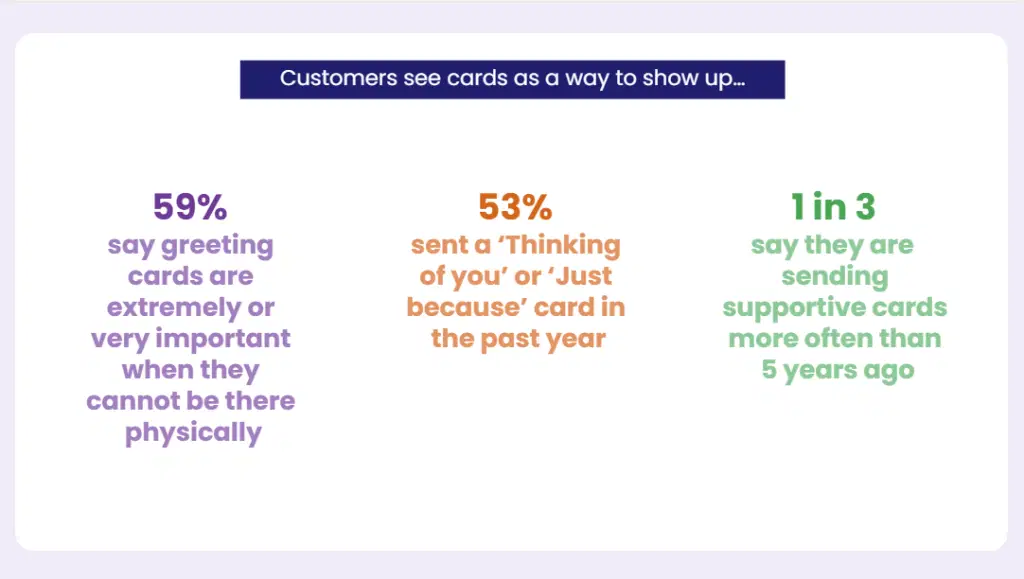
Almost six in ten consumers say greeting cards are extremely or very important when they cannot be there in person. More than half have sent a Thinking of You or Just Because card in the past year, while nearly one in three say they are sending supportive cards more often than they were five years ago.
Perhaps most importantly, consumers said they aren’t looking for cards that try to solve problems.
The messages people most want to send are simple and reassuring:
The research also highlighted an opportunity for the industry. Almost half of consumers surveyed said they had struggled to find an appropriate supportive card, while many admitted they had considered sending one but lacked the confidence to choose the right wording or design.
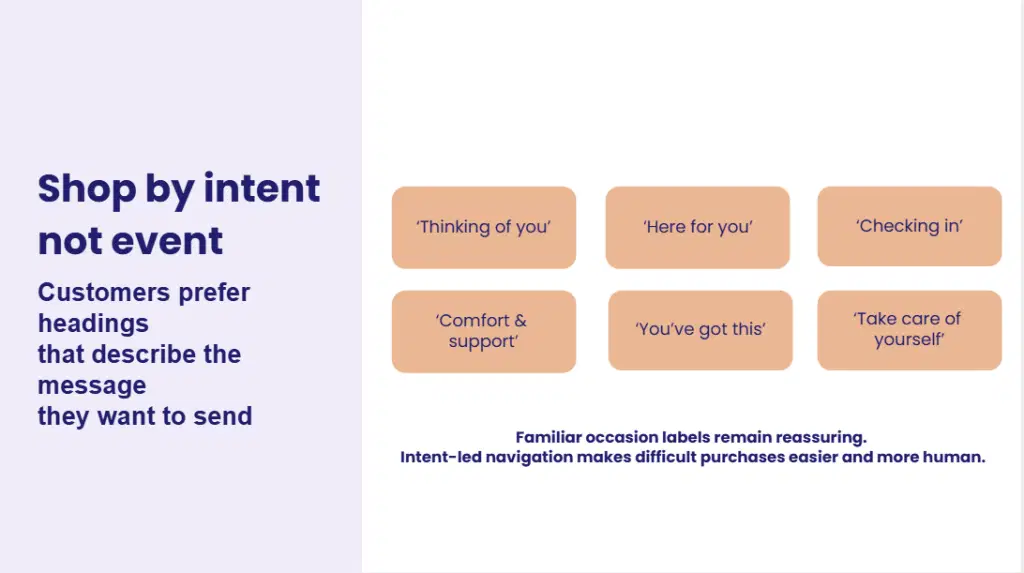
Four Areas of Care & Connection
The research identified four broad areas where supportive card sending is already evolving:
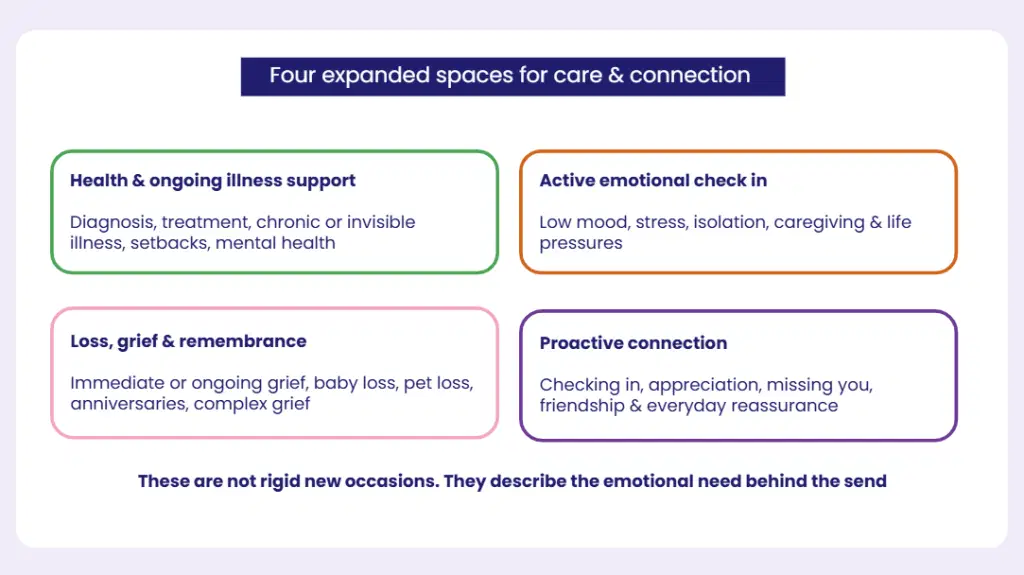
Importantly, these are not intended to become rigid new occasions. Instead, they help us better understand the emotional reasons people send cards and the language they are looking for.
Looking Ahead
The presentation concluded by encouraging the industry to consider three key areas: language and tone, representation and discoverability.
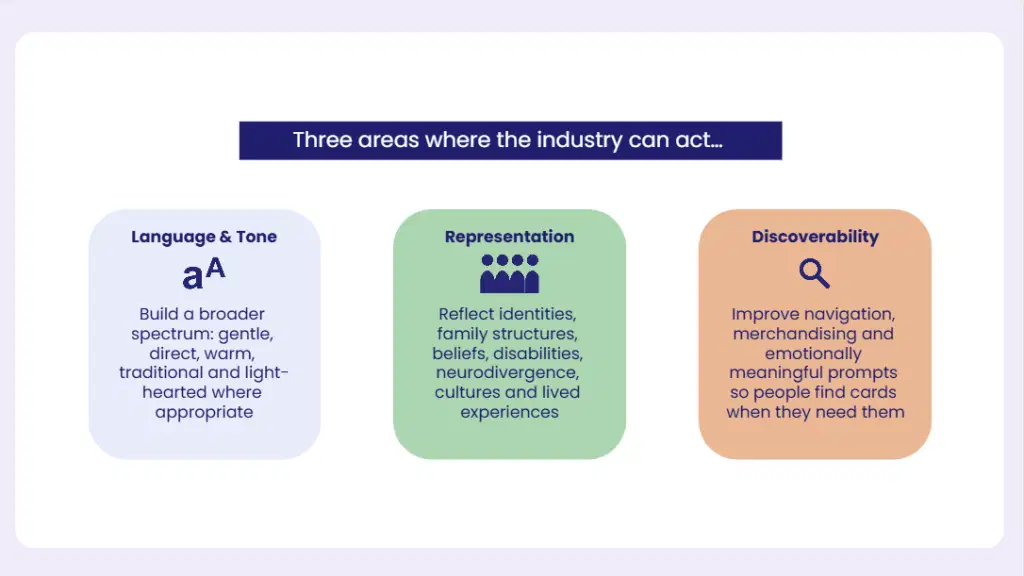
For publishers and retailers alike, the challenge is to ensure that supportive cards are easy to find, reflect the diversity of modern lives and use language that feels sincere, relevant and emotionally appropriate.
Care & Connection is not a rebrand of existing occasions, nor is it about replacing the categories consumers already know and trust. Rather, it is an acknowledgement that the ways people seek support, offer reassurance and stay connected are evolving.
Ultimately, Care & Connection is about ensuring greeting cards remain relevant to the way people live, communicate and support one another today.
Greeting cards have always been about helping people express what matters most. As consumer needs continue to change, Care & Connection challenges us to think about how our products, language and categories can continue to reflect the many ways people care for one another.
Because perhaps the future challenge isn’t that people no longer want to send cards; it’s that we need to offer more ways to help them say what they truly feel.